



Tuna is a very easy fish to cook, very forgiving as it is a meaty fish. We most often eat tuna as sashimi, like the top photo. Usually just garnished with soy sauce and wasabi. If you can find wasabi salt you may like that too as a seasoning.
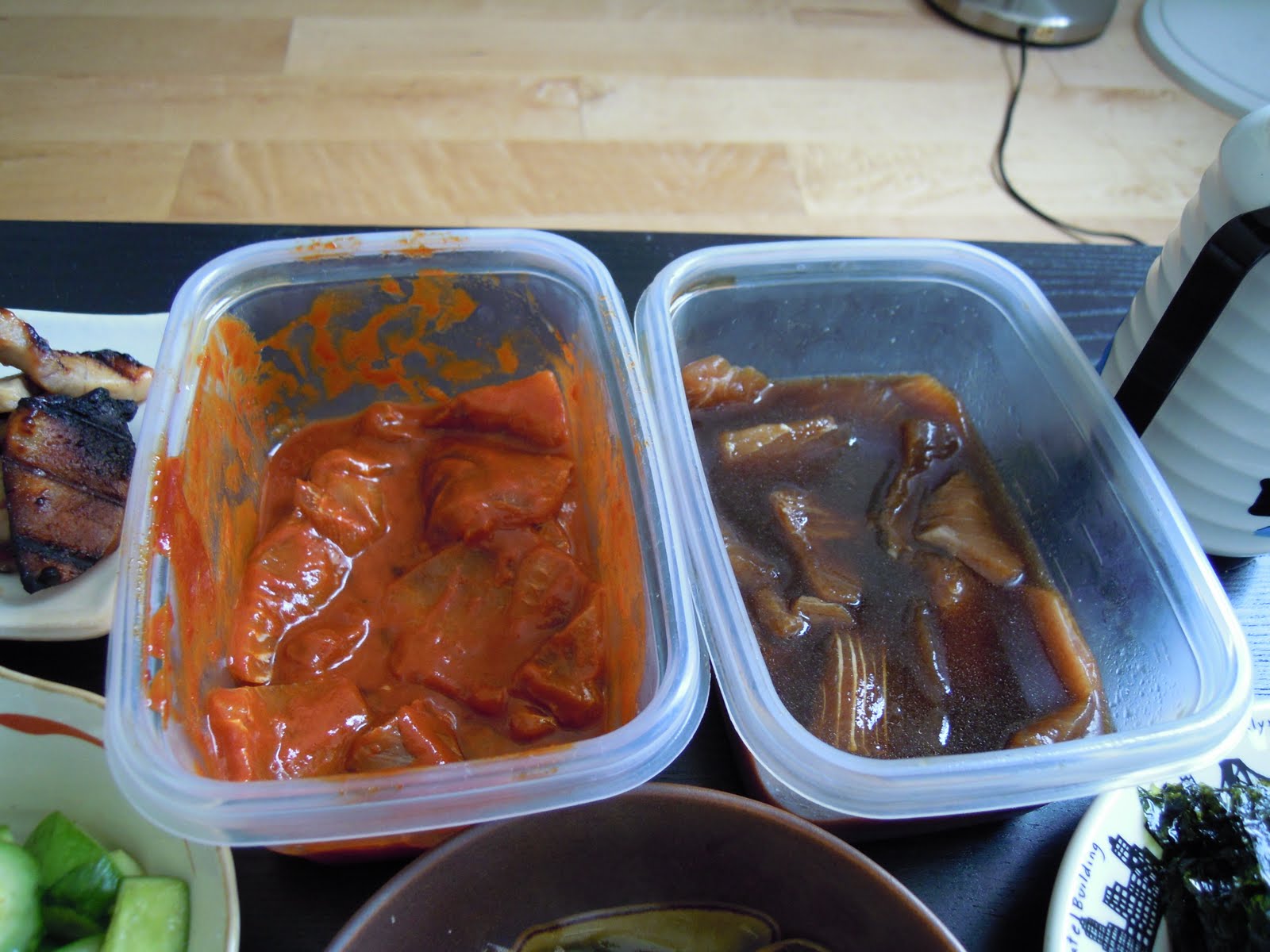
When we can not finish all of the tuna sashimi Shinji likes to marinate it. This day he made two marinades, one a typical teriyaki sauce of sake, mirin, soy sauce, and sugar (mix to taste but usually one part each of the sake, mirin, and soy sauce and then add sugar to your liking). The second marinade was of Korean spicy miso (kochujan) with some sake and sesame oil.
We simply grilled them until cooked through. Perfect with a bowl of rice or as a snack with some sake or shochu on the rocks.


Takikomigohan is rice steamed with different ingredients. It can be as simple as green peas or as complicated as several different ingredients such as a gomokugohan. Gomokugohan would have five different ingredients in the rice pot with the rice like chicken, carrots, shiitake mushrooms, hijiki, and gobo, for example. The rice is steamed with water, sake, mirin, and soy sauce.
As Shinji is a fishmonger we often make our takikomigohan with seafood. If you are working with raw fish like a whole sea bream or a filet of salmon, the fish needs to be salted and grilled before adding it to the rice pot. If the fish is not grilled the rice will be very fishy. I made the mistake once and will never do it again.
This is a very simple recipe. The scallops are pre-cooked. The amount of liquid to rice is still one to one, as when steaming white rice. The only difference is that a bit of sake, mirin, and soy sauce is added to the cup before being topped off with water. Steam as normal.


